Is It Better to Spot Clean or Deep Clean a Fabric Sofa?
Most upholstery stains start the same way: something gets spilled, a small mark appears, and the first instinct is to try to clean it at home.
For a fresh, isolated stain, that is often a reasonable first step. There are plenty of DIY upholstery-cleaning methods, products, and videos online, including on YouTube. Some can work well for minor spills when the right product and technique are used.
The problem usually starts when a small stain does not come out, more water or cleaning product is added, and the treated area becomes larger than the original spot.
When Does Spot Cleaning Make Sense?
Spot cleaning is most appropriate when the stain is fresh, small, and isolated and the surrounding upholstery is still clean.
Examples include:
- A fresh food or drink spill
- One small stain
- Light surface contamination
For a fresh spill, blot rather than scrub, avoid soaking the fabric, and follow the manufacturer’s care instructions.
Upholstery fabrics react differently to moisture and chemicals. A product that works well on one synthetic fabric may leave residue, discoloration, rings, or texture changes on another.
Repeatedly adding water or stronger household stain removers can make the problem worse.
Why Can Spot Cleaning Leave Rings or Discoloration?
One of the most common problems after DIY upholstery cleaning is a visible ring or halo around the treated area.
This can happen when:
- Too much water or cleaning product is applied
- Cleaning residue remains in the fibers
- Dissolved soil moves toward the edge of the wet area while drying
- Only part of an already soiled cushion is cleaned
- The upholstery dries unevenly
- A cleaning product reacts with the fabric or dye
Sometimes the original stain becomes less noticeable, but the cleaning attempt creates a larger visible area around it.
This is also why cleaning only a small part of used upholstery does not always produce an even result. The treated section may dry noticeably cleaner or lighter than the surrounding fabric.
Why Professionals May Clean More Than the Visible Spot
When a stain is located on upholstery that already has normal soil from regular use, a professional cleaner may recommend cleaning the entire cushion, seating section, or sofa rather than treating only the visible mark.
The goal is to remove the contamination while keeping the overall appearance as even as possible.
Having a professional service come out to clean only one very small spot may also not be cost-effective. Upholstery cleaning companies typically have a minimum service charge for an on-site visit because travel, setup, equipment, and labor are involved regardless of how small the stain is.
In the Charlotte area, minimum on-site service charges vary by company and are often around $100 to $150 or more. LCM Company’s minimum on-site cleaning charge is $120.
Two Real Examples of DIY Spot Cleaning
Two LCM Company jobs show how differently DIY stain removal can turn out.
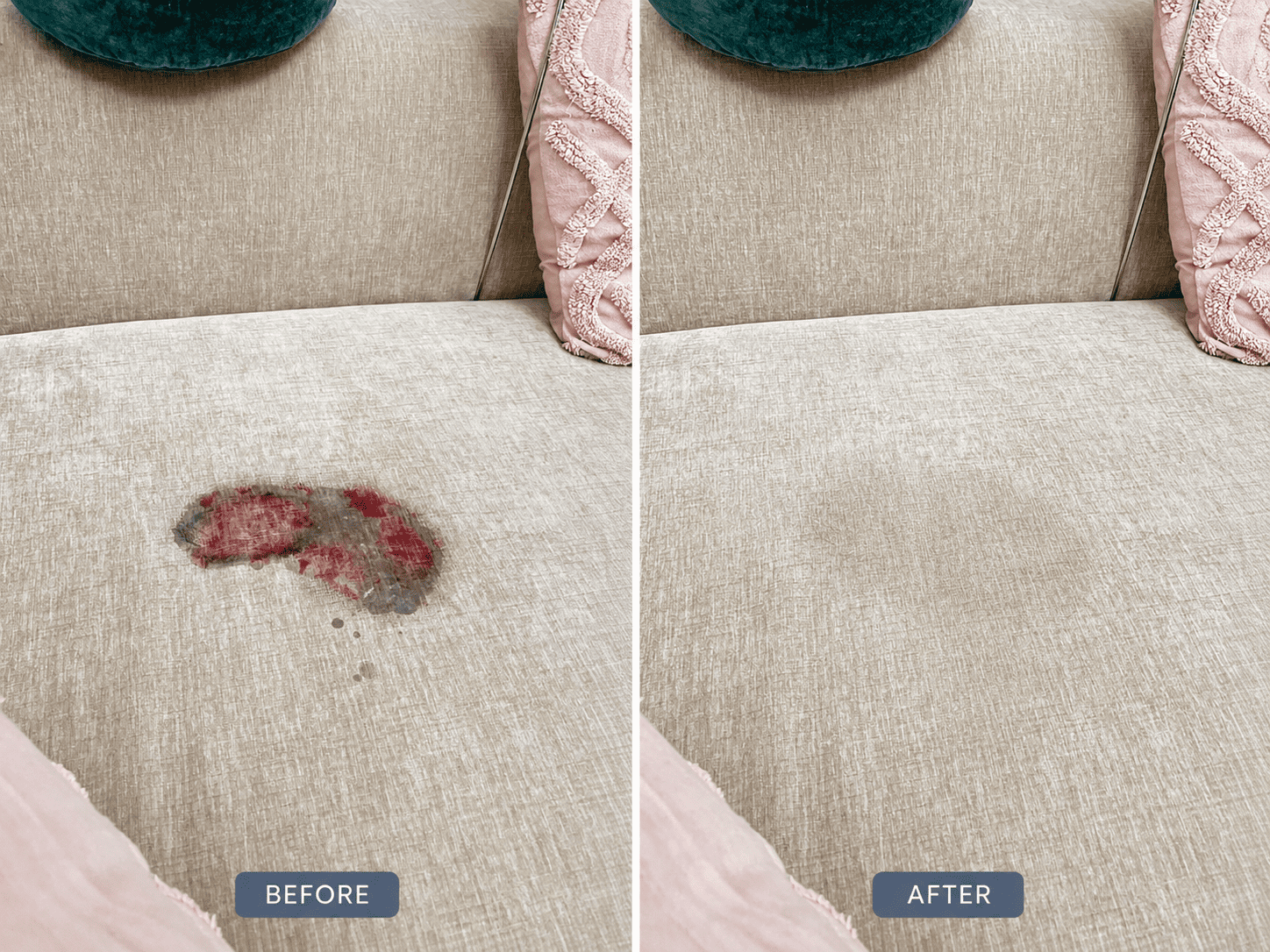
Blood Stain and OxiClean on Performance Chenille
A customer tried to remove a menstrual blood stain from a performance chenille sofa using OxiClean before contacting us.
During professional cleaning, we were able to remove the remaining blood contamination. However, the product used previously had already lightened the upholstery and created a visible halo around the treated area.
The discoloration was permanent. Professional cleaning could remove contamination and residue, but it could not restore dye that had already been chemically altered.
Baby Stool Stain on a Recliner
In another case, a customer had already tried to clean a recliner after a baby soiled the upholstery before calling us.
The area had been wiped and treated at home, but the fabric had not been permanently discolored.
After professional cleaning, the remaining contamination was removed and the upholstery cleaned successfully without a permanent visible mark.
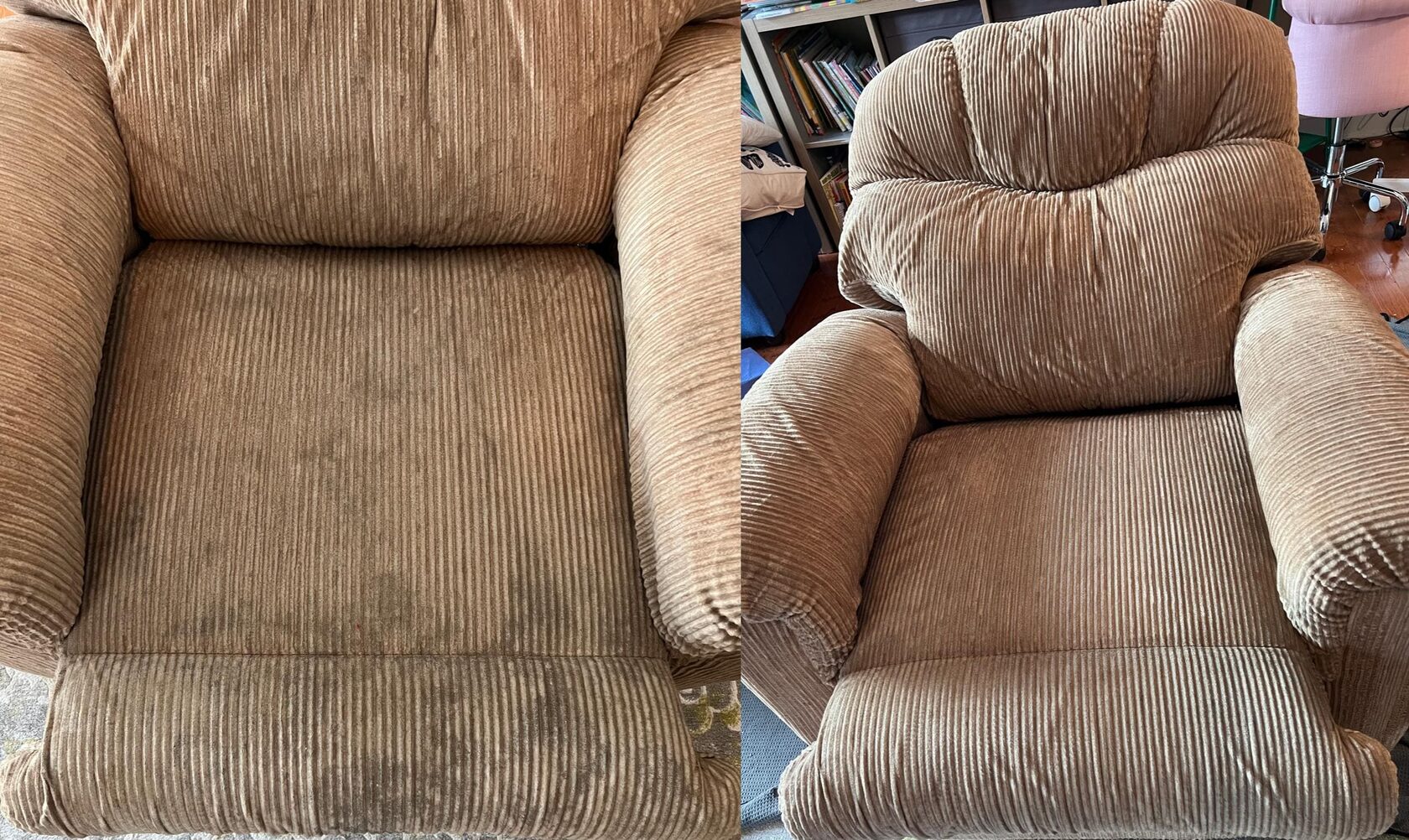
These examples show that the final result depends not only on the stain itself, but also on the upholstery material, the product previously used, and whether the fabric or dye was permanently changed during the first cleaning attempt.
When Does Professional Deep Cleaning Make More Sense?
Professional cleaning becomes more practical when the problem is no longer limited to one fresh stain or when the furniture has accumulated soil across a larger area.
Common examples include:
- Several stains in different areas
- Darkened armrests or headrests
- Body-oil buildup
- Pet contamination or odors
- Stale or musty smells
- General soil from regular use
- Noticeable differences between cushions
- Rings or residue from previous DIY cleaning
- Furniture that has not been professionally cleaned for several years
In these situations, treating one visible stain does not address the dirt, oils, odors, and residues present across the rest of the upholstery.
What Does Professional Upholstery Cleaning Involve?
The cleaning method should be selected according to the fabric, construction, and condition of the furniture.
For upholstery suitable for extraction cleaning, the process may include:
- Dry vacuuming
- Professional pre-treatment
- Agitation when needed
- Targeted stain treatment
- Hot water extraction
- Rinsing
- Odor treatment when required
Hot water extraction is different from simply spraying a stain remover onto the surface. Pre-treatment helps loosen soil from the fibers, while the extraction tool flushes and removes suspended dirt, moisture, and cleaning residues from the upholstery.
Not every fabric should be cleaned with the same amount of moisture or chemistry, so the process must be adjusted to the material.
Can Professional Cleaning Remove a Stain That DIY Cleaning Could Not?
Often, but not always.
Different types of contamination require different treatment methods. Blood, pet stains, grease, coffee, wine, ink, and body oils do not necessarily respond to the same cleaning chemistry.
The result depends on:
- The type of stain
- How long it has been present
- The upholstery material
- Products previously applied to the area
- Whether the fibers or dye have already been permanently altered
Older stains may sometimes be removed completely and sometimes only significantly lightened.
Strong oxidizers, bleach-containing products, aggressive cleaners, or excessive scrubbing can permanently alter the color or texture of the upholstery. Once that kind of damage has occurred, cleaning cannot reverse it.
Should You Spot Clean or Call a Professional?
If you are unsure, sending photos before applying additional products can help determine the safest next step.
Professional Sofa Cleaning in Charlotte, NC
LCM Company provides professional upholstery cleaning for sofas, sectionals, chairs, mattresses, and other upholstered furniture in Charlotte and surrounding areas.
Customers can send photos of the furniture and problem areas before scheduling. We can review the condition, recommend an appropriate cleaning approach, and provide the price in advance.